
🏔️ History of Lower Solukhumbu & Mera Peak Climbing – Information>
The Lower Solukhumbu region and Mera Peak (6,476 m) are deeply connected to the exploration, culture, and mountaineering history of the Everest Himalaya. This area lies in eastern Nepal within the Solukhumbu District, and has played an important role in the development of Himalayan trekking and climbing.
📜 Early Exploration of Lower Solukhumbu>
Lower Solukhumbu was historically home to the Sherpa community, who migrated from Tibet centuries ago. The region became an important part of Himalayan trade routes and spiritual life.
Before modern trekking began, this area was:
A remote trading corridor between valleys and high mountains
A cultural center of Sherpa Buddhist traditions
A gateway to higher Everest region expeditions
Early explorers traveling toward Everest often passed through Lower Solukhumbu villages such as Lukla, Paiya, and Kharikhola.
🧗 Discovery and Naming of Mera Peak>
Mera Peak was first identified during early Himalayan mapping and exploration in the mid-20th century. It consists of three main summits:
01: Mera North
02: Mera Central
03: Mera South (main climbing route)
The peak gained attention as a potential climbing objective due to its high altitude but relatively non-technical route compared to other Himalayan peaks.
🏔️ First Ascent History>
Mera Peak was first successfully climbed in 1953 by a British expedition team, which included well-known Himalayan explorers such as Jimmy Roberts and Sen Tenzing.
Since then, it has become one of Nepal’s most famous trekking peaks, officially classified by the Nepal Mountaineering Association.
It is now widely used as a training peak for higher expeditions in the Everest region, including Mount Everest.
🧭 Development of Trekking Routes>
The trekking route through Lower Solukhumbu developed gradually after Nepal opened for tourism in the 1950s–1970s. Over time, it became a popular alternative route to the Everest region.
Key developments include:
01: Growth of tea houses in villages like Lukla, Chhuthang, and Kothe.
02: Establishment of trekking routes through the Hinku Valley.
03: Increased mountaineering expeditions to Mera Peak.
04: Integration with Makalu Barun and Khumbu trekking systems.
🏕️ Modern Climbing Significance>
Today, Mera Peak Climbing combined with Lower Solukhumbu trekking is one of Nepal’s most popular high-altitude adventures.
It is valued for:
01: Non-technical glacier climbing experience.
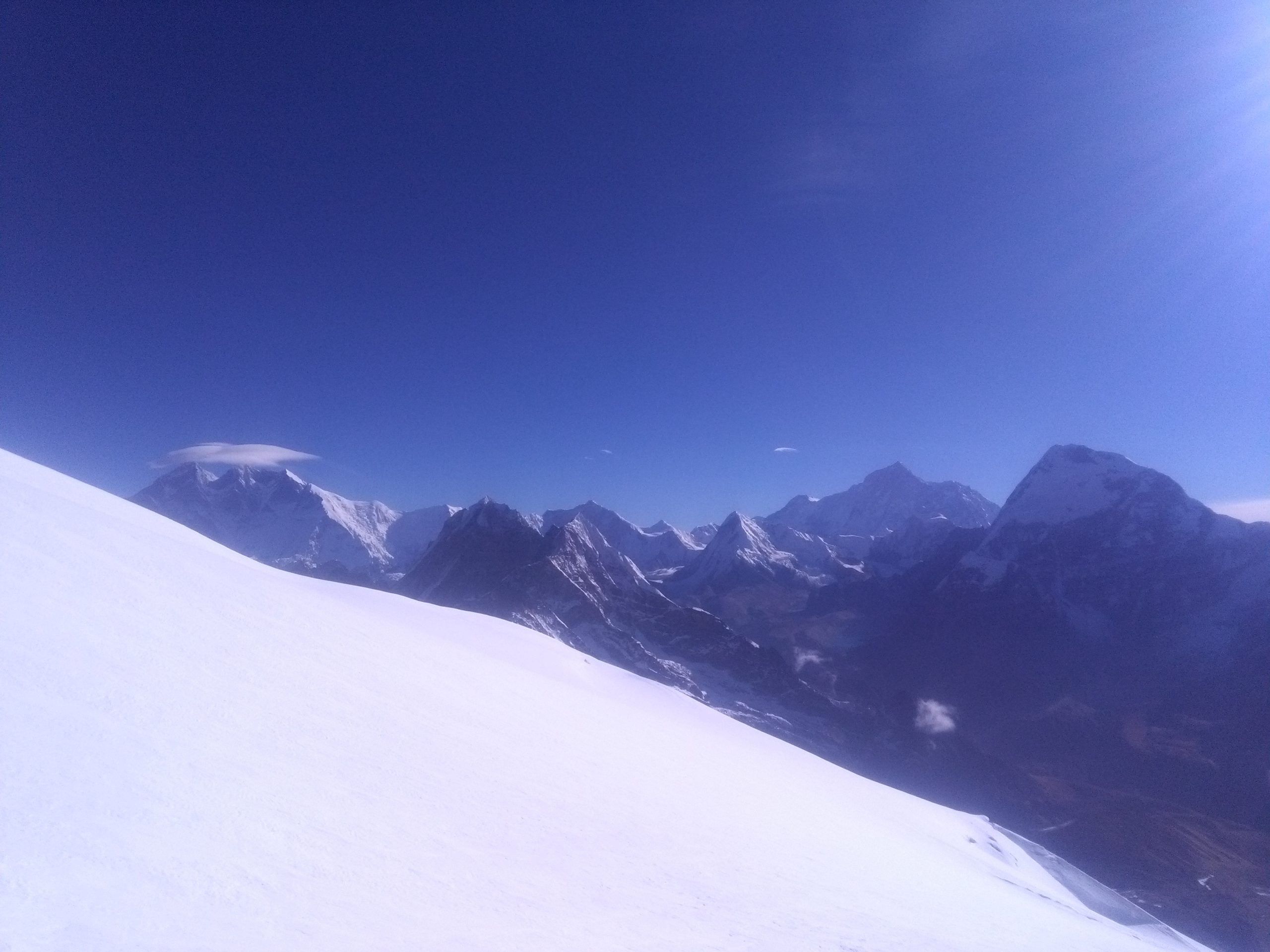
02: Stunning panoramic Himalayan views (Everest, Lhotse, Makalu, Cho Oyu).
03: Remote trekking through untouched valleys.
04: Cultural immersion in Sherpa villages.
🌿 Cultural Importance>
Lower Solukhumbu remains a stronghold of Sherpa culture, Buddhism, and traditional Himalayan lifestyle. Monasteries, prayer flags, and ancient villages reflect centuries of heritage.
This cultural foundation adds deep historical value to the trekking experience.
Overview
The Lower Solukhumbu & Mera Peak Climbing (6,476 m) adventure is a scenic and high-altitude journey that passes through beautiful lower valleys, traditional villages, and remote Himalayan landscapes before reaching Mera Peak—the highest trekking peak in Nepal.
This package usually combines cultural trekking in Lower Solukhumbu with a full Mera Peak climbing expedition in the Hinku Valley.
Trip Highlights
- The Mera Peak Summit (6461m), is Nepal’s highest trekking peak.
- Close-up views of Mt. Everest (8848.86m), Kanchenjunga (8586m), Lhotse (8516m), Makalu (8463m), and Cho Oyo (8188m).
- Everest region’s exotic flora and animals. Glacial lakes, Hinku valley, waterfalls, yak pastures, rhododendron jungles, and glacial rivers are just a few of the highlights.
- Small, pocket-sized communities, less-traveled paths with breathtaking views.
- Immerse yourself in the isolated culture and lifestyle while surrounded by lofty pinnacles.
- A sufficient number of acclimatization days, as well as pre-climbing training, are required before the summit push.
- An experienced Sherpa climber guided the trek.
- Following off-the-beaten paths, pass via the lovely Sherpa settlements of kharikhola or pangong, Thaknak, and Khare.Najingdingma.
- Considered a "trekking peak," meaning you can reach the base camp primarily by trekking, unlike some more technical peaks requiring advanced climbing skills.
- While considered relatively easy for a peak of its height, glacier travel and high altitude still pose challenges, requiring good physical fitness and proper preparation.
- Spring (March-May) and Autumn (September-November) offer the most stable weather conditions for climbing Mera Peak.