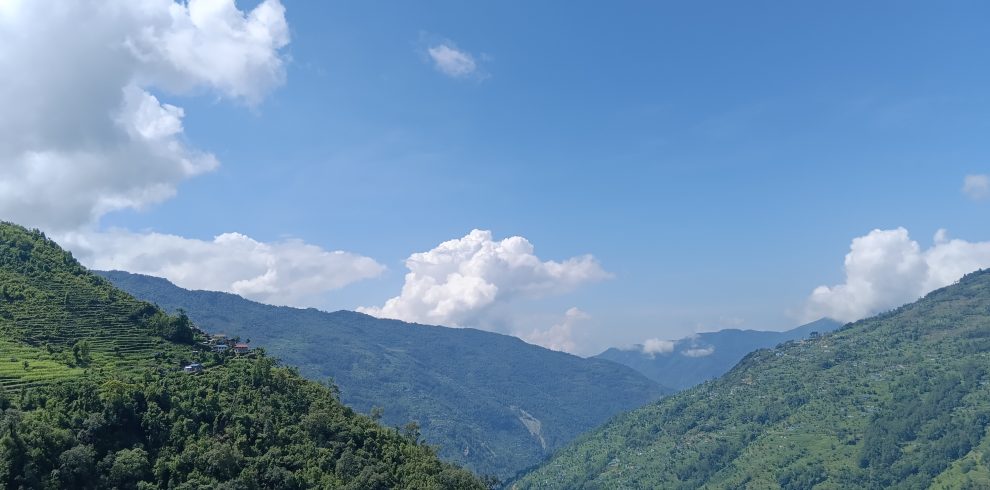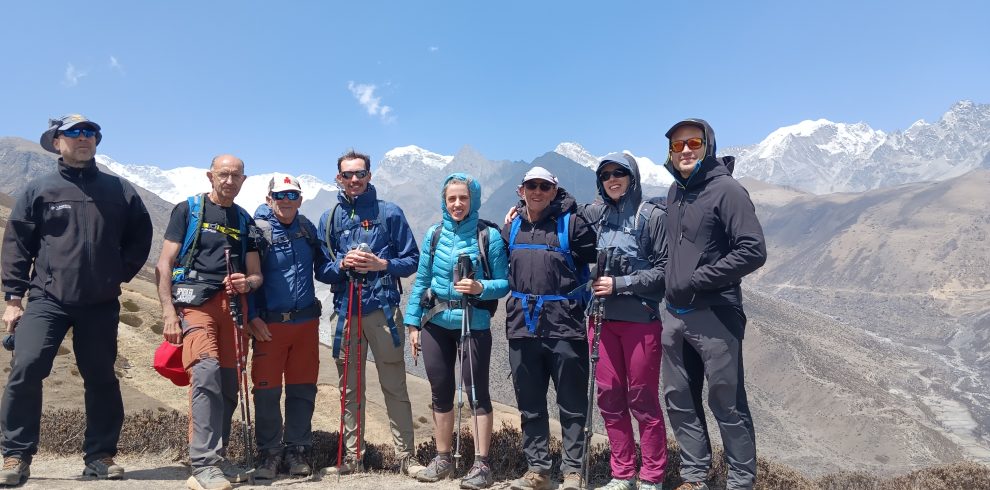


The Everest Base Camp (EBC) Trek is one of the most iconic trekking adventures in the world, taking you deep into Nepal’s Khumbu region to the foot of Mount Everest (8,848.86 m), the highest mountain on Earth. This trek blends dramatic Himalayan scenery, rich Sherpa culture, and a true sense of high-altitude adventure.
Everest Base Camp Trek will retrace the footsteps of New Zealander Sir Edmund Hillary and Tenzing Norgay who reached the summit on their epic ascent in 1953. Heading into the Sherpa heartland of Khumbu Valley allows you to gradually acclimatize on your way to Base Camp (BC). The scenery is awe-inspiring, with the Khumbu region boasting 4 of the world’s 6 tallest peaks, including Mt. Everest, Mt. Lhotse, Mt. Makalu, and Cho Oyu. Trekking in the Himalayan ranges gives you a first-hand glimpse into the life of world-famous climbers -the Sherpas. Experience life in the highest Buddhist monasteries in the world and explore the World Heritage-listed Sagarmatha National Park and its unique variety of Himalayan flora and fauna.
The Sherpas have a traditional and well-deserved reputation of being the best mountain guides in the world. Their stamina and strength is unparalleled. You will discover Buddhist monuments, Sherpa stone stupas and carved mani walls (Tibetan) and decades-old monasteries as well as some of the most spectacular scenery imaginable in the Khumbu Valley. Lodges here range from standard to luxury. The Sherpa people have a reputation for their hospitality, kindness, and sense of humor. This is understandable when you live on top of the world!
On this trek, you will reach an altitude of 5,550 meters at Kala Patthar just 2 hours away from Gorakshep, which is one of the highlights of your trek to Everest Base Camp. Gorakshep offers you the best view of Everest and a place where your camera goes into overload!. You will also have a panoramic view of Changtse, Nuptse, Lhotse, and Khumbu glacier.
Millions of people dream of travelling to this majestic land of iconic mountains. If you want to make your dream of Everest come true, then share your dream with us and we will tailor your trek to meet your expectations.
Overview
Everest Base Camp trekking is a high-altitude teahouse trek that leads adventurers through the Khumbu Valley to the base camp used by climbers attempting Mount Everest via the South Col route. The trek does not involve technical climbing, making it accessible to fit trekkers with determination and proper acclimatization.
Along the trail, trekkers enjoy close-up views of legendary peaks such as Everest, Lhotse, Nuptse, Ama Dablam, Thamserku, and Pumori.
Trip Highlights
- Standing at the foot of Mount Everest at 5,364 m.
- Sunrise view from Kala Patthar (5,545 m).
- Crossing iconic suspension bridges over the Dudh Koshi River.
- Immersion in Sherpa culture, lifestyle, and Himalayan Buddhism.
- Visit to Tengboche Monastery, the spiritual center of Khumbu.
- Sherpa villages: Namche Bazaar, Tengboche, Dingboche.
- Scenic mountain flight to Lukla Airport.
Itinerary
Our office representative will be on standby with our vehicle to Meet and greet you at the airport. You will see our display board with your name written inside a heart with ‘Everest Alpine Trekking distinctly displayed. This is the only display board of its kind among a whole lot of others. You will be transferred to your hotel. Depending on your arrival time, you may have the opportunity to get familiar with the area of the hotel surroundings and get acclimatised to this happening medieval city. Alternatively, you may prefer to recover from your journey by relaxing beside the hotel pool and get rid of all that jetlag. Your guide will later provide you an informal briefing about your trip in the days ahead. Later in the evening it would be good to have an early supper and get to bed so you could get up early the next day to begin your trip. Overnight at your hotel in the valley of temples, some say it’s the most on earth.
We will need to wake up before the birds and depart the hotel at around 2-3am for a drive to Manthali (Ramechhap) airport to catch our flight to Lukla. During this time of day there is usually light traffic, the drive ought to take something like 3-4 hours. Roads in Nepal are not of the same standard like the west, there may be potholed areas and the last section is pretty roughshod.
We fly to the mountain airstrip of Lukla (2,800m); and relish what we see on one of the most beautiful air routes on earth, which stunningly concludes on a sharp ridge surrounded by high mountainous peaks. Lukla is a gateway to the Khumbu region and our trek begins from hereabouts. We meet our other crew members and begin sorting out our equipment with help from them. We then hit the trails for a brief leg of our trek, heading northwards up the valley of the Dudh Kosi (or 'Milk River'known so because of the gushing streams that look white and milky). We descend from the small plateau, down into the lush forested valley. The trail offers some teasing views before reaching the small settlement of Phakding at (2,652m), where we spend our first night in a Tea-house lodge (our sleeping altitude is 2,652m)
After a hot breakfast, we head out of Phakding and follow the Dudh Kosi northwards. Today's hike takes us through splendid forests with lovely vistas of the mountains ahead. We criss-cross the river several times by airy bridges as we pass through the villages of Benkar, Monjo and Jorsale. The last bridge brings us to the foot of the sharp climb to Namche. Halfway up this ascent, we are likely to get our first views, if the clouds are kind, of the summit of Everest which appears regally behind the great rim of Nuptse-Lhotse. A last 300m of clambering brings us to Namche Bazaar, the Sherpa capital and the main town in the area. Namche is a flourishing Sherpa town and an ancient trading centre.
It has a weekly market on Friday afternoon and Saturday morning but the town buzzes everyday with trekkers, coffee shops, bakeries, ATMs, internet cafes, government offices, a bank, great restaurants and stores selling all kinds of trekking and climbing gear as well as Tibetan souvenirs. You will have enough time to stroll around and strike up a bargain for something you like. We will bunk out in a hotel or teahouse lodge (our sleeping altitude is 3,440m)
After breakfast, we begin our acclimatization hikes. It is important walking to higher altitudes during your two day stay in Namche Bazaar. There are options here to trek to Khumjung where you can visit the local school and hospital or to Thame village, home to Sherpa Everest expediters, namely, the great Everest climber Tenzing Norgay.
We can also hike to the airstrip in Shyangboche at (3720m), above the airstrip is the Everest view hotel, which was set up by the Japanese to bring affluent tourists into the region for a prime view of Everest. The scheme was brought down by the fact the hotel was at nearly 4000m and many suffer from altitude sickness.
For much of the walk, we have great views of Ama Dablam and other Himalayan giants. We walk back down through Khumjung to a monastery. Sadly, it was damaged in the earthquake but is now being repaired. Inside is a small box and after paying the entry fee (which goes towards the repairs) - we will be shown the only Yeti skull in the world! Descending to the main trail we spend the night at Namche
This morning after breakfast, we descend to the river line; and cross it at the small settlement of Phunki Tenga at 3,250m, then climb steeply through the forest to Tengboche at 3,870m. We ought to arrive here by lunchtime and at high noon we will visit the famous monastery. The sunset and sunrise on these unbelievable panoramas of mountains we behold is something we will never forget for some time to come - Everest, Nuptse, Lhotse and Ama Dablam provide a spectacular backdrop to our teahouse. As we hike we look out for Himalayan Tahr in the lush forest surrounding the monastery. We crash out in our tea-house (sleeping at an altitude of 3,870m).
After breakfast, we descend and hike through dense forests filled with a variety of abundant trees – birch, conifers and rhododendrons. This walk wonderfully rewards us with fabulous views of Mt. Everest, Lhotse, and Ama Dablam. The quaint trail dips down to Deboche, crosses the Imja River and takes us to pretty village of Pangboche. The upper Pangboche trails welcome us with more immaculate views of the big peaks and the old Pangboche Monastery, one of the oldest in the Khumbu. The hike then goes ahead towards the Imja Valley, Lobuche River and finally begins clambering up to Dingboche. At Dingboche, we see a fine display of fields surrounded by stone walls to protect crops of barley, buckwheat and potatoes from the cold winds and grazing animals. We spend the night here in a tea-house lodge (sleeping at an altitude of 4,350m).
Dingboche is a well known haul up point for trekkers and climbers making a beeline to Mt. Everest, Ama Dablam or Island Peak [Imja Tse]. The chocolate box village is attractive with an assortment of fields surrounded by stone walls to protect precious crops like barley, buckwheat and potatoes from strong winds and grazing animals. We hang around for a day at Dingboche to get used to the thin air we will experience in the days ahead. We take day hikes to either Nagarjun Hill or Chukkhung Valley for great views of Makalu, Lhotse, Cholatse, Tawache and Ama Dablam. Those adapting well to the altitude can climb Nangkartshang Peak at 5,100m. There is the option to climb halfway to the peak or for the energetic it takes about 3.5hrs to the top. It’s a tough and steep climb but well worth the effort for the amazing views. We bunk out at the same altitude for the night.
After breakfast, we set out on the trail as it climbs steeply out of Dingboche past a chorten and ascends the valley gradually to Dughla at the end of the terminal moraine of the Khumbu Glacier. We haul up hereabouts for a tea break and munch on some snacks before the sharp climb up to Chupki Lhara, a beautiful, yet touching place where you will find a line of memorials in honor to the climbers who died on Everest and from where we have beautiful views of the peaks lying on the Nepal-Tibet border. Our trail then cools off as we go by the valley to Lobuche, a pretty little hamlet with a few teahouses. Late afternoon we get options to hike up onto the lateral moraine of the Khumbu glacier to witness a breathtaking sunset on Nuptse which you will not forget in a hurry. We then spend the night in a tea-house sleeping at an altitude of 4,940m).
Today after breakfast, we must be prepared for a grueling, challenging day and for this we must hit the trails very early. We head for the Khumbu Glacier northwards to Gorak Shep. The trail goes up and down the moraine with some short steep sections. The path is stony as we are now on the lateral moraine of the Khumbu Glacier. We take something like 2-3 hours to reach Gorak Shep where we haul up for a breather and something to eat. Between base camp and back no lodges are available, so we will fill our water bottles and carry some snacks for the journey to Everest Base Camp. We start by walking across a grimy flat at Gorak Shep and climb onto the lateral moraine of the Khumbu glacier. The trail ascends the side of the glacier for several hours before finally descending onto the rocky glacial moraine itself. The trail winds up and down through interesting ice seracs to the area we call Everest Base Camp. In spring, we might see in the distance some of the expedition teams gearing up to climb the mountain. From the Base Camp we get stunning upfront views of the Khumbu Ice Fall as we understand just how difficult it is for the climbers to negotiate a route through the huge blocks of ice. Nuptse towers above us and Pumori rears up behind us.
After a brief halt to get some great pictures by the Base Camp rock we retrace our steps to Gorak Shep. We stop here for a night in tea-house lodges sleeping at an altitude of 5,170m.
We get set for an early morning departure, real early at the break of dawn in darkness and cold temperatures (-10 to -14 C). Plus, we must brace up for biting winds which are quite common. Familiar peaks such as Lingtren, Khumbutse, and Changtse tower to the east even as Everest begins to reveal itself. Nevertheless, it is upon reaching Kala Pathar that we get to see 360 degree close-up and gripping, breathtaking views of Mt. Everest. Our video cams go on overdrive; we enjoy the glorious mountain panorama, and then return back to Pangboche via Pheriche for a well earned night's rest. The early afternoon time is used to descend down to Pangboche for a good night's rest. Pangboche is a great village to spend the day because of its ancient monastery.
We also interestingly get to know that all the ice doctors who prepare Everest summiteers for the big climb hail from this pretty village. We spend our night at a teahouse lodge sleeping at an altitude of 3985m.
After breakfast, we begin our trek down through a ridge carpeted by rhododendron and juniper trees. After crossing the airy prayer-flag festooned bridge over the Dudh Koshi River, our trail clings to the Dudh Koshi gorge descending rapidly, but pleasantly through pine forests. While in the forest, we may come across colorful pheasants and mountain goats. The route finally reaches Sanasa from where we can enjoy views of Ama Dablam, Thamserku and Nuptse mountains. We also pass meandering trails and then cut through a forest before reaching the bustling Namche Bazaar. We do an Overnight in Namche Bazaar at an altitude of 3,440m.
Today the trail descends sharply downward so we need to take care as our tired wobbly legs continuously navigate the rock-strewn terrain. After crossing some airy suspension bridges over the gushing Dudh Koshi and its tributaries, the trail gets a bit easy going and natural. When we finally touch down at Lukla, we relax our aching legs and reminisce on the wonderful experiences of the last couple of weeks. We arrange for a special celebration because this is our last day on these mountains that have given us so much of joy all these days. We then go to bed after a wonderful day in Lukla.
We hop an early morning flight to Kathmandu after our almost 2 weeks mountain odyssey. On reaching Kathmandu, we can take some rest or do some last minute souvenir shopping. If we want to participate in any other activities of ancient Kathmandu, we may do that today. Our guides can help you with some shopping or sightseeing. We will enjoy a farewell dinner at a good restaurant in the evening. While enjoying our meals, we’ll be entertained to some scintillating cultural dances performed by the local belles to celebrate the successful conclusion of a fantastic trip. Overnight in Kathmandu.
After breakfast, our rep and office vehicle will be on standby at our hotel to transfer us to the airport for our connecting flight home. Serving you was an honour and pleasure, we at Everest Alpine Trekking will treasure the bonds of our friendship created over the time you spent with us and we thank you for choosing us as your travel operator and visiting our incredible country Nepal. We know that trekking in this striking region of the Khumbu [Everest region] will give you lifetime memories of a vacation well enjoyed.
Cost Includes
- Domestic flight tickets (Kathmandu – Lukla – Kathmandu) and airport departure taxes.
- All standard full-board (main course) meals (13 lunches, 14 dinners, and 14 breakfasts ) during the trek.
- Government licensed English-speaking trek leader. For more than 12 trekkers, 1 assistant guide.
- Porter to help trekkers luggage. 2 trekkers will share 1 porter, Max weight limit for a porter- 18 kg (9 kg per trekker, weight limit).
- You can store non essential items in your hotel or at the DWT store.
- Covers guides' and porters' wages, their meals, insurance, lodging, transportation, flight, and other necessary equipment.
- Water purification tablets for safe drinking water.
- Sagarmatha National Park entry permit fee.
- Khumbu Pasang Lhamu Rural Municipality fees.
- Snacks (cookies) and seasonal fresh fruits every day.
- All government, local taxes, and official expenses.
- Assistance in arranging rescue operations in case of complicated health conditions (funded by travel insurance).
- Farewell dinner at the end of the trek.
Cost Excludes
- International flight costs.
- Nepal Entry Visa Fees for multiple entries on arrival at Tribhuvan International Airport.
- Excess baggage charges (Limit is 9 kg per Person) on the trek.
- All accommodations and meals in Kathmandu, before and after the journey.
- Extra night accommodation in Kathmandu due to early arrival or late departure, or early return from the trek.
- Personal expenses (shopping, snacks, boiled bottle water,hot shower, alcohol,
- Wi-Fi, telephone call, battery re-charge fee, extra porters.
- Personal clothing and gear.
- Travel insurance that covers emergency high-altitude rescue and evacuation (compulsory).
- Tips for guides and porters (recommended).
- Additional costs incurred due to causes beyond our control, for example, landslides,
- weather conditions, itinerary modifications due to safety concerns, illness, change of government policies, strikes.
- All other costs and expenses not listed in ...
FAQS
The Everest Base Camp (EBC) Trek is a classic Himalayan trek that takes you to the base of Mount Everest (8,848.86 m), the world’s highest mountain. The trek offers breathtaking mountain views, Sherpa culture, and a journey through Sagarmatha National Park.
01: Standard duration: 12–14 days (including acclimatization)
02: Some itineraries range from 10 to 16 days, depending on pace and side trips.
The trek typically starts with a scenic flight from Kathmandu to Lukla, followed by trekking through villages such as Phakding, Namche Bazaar, Tengboche, Dingboche, Lobuche, and finally Everest Base Camp.
The trek is considered moderate to challenging. No technical climbing skills are required, but trekkers should be physically fit and prepared for:
01: Long walking days (5–7 hours)
02: High altitude
03: Cold temperatures
01: Everest Base Camp: 5,364 m
02: Kala Patthar (viewpoint): 5,545 m (highest point for most trekkers
Previous trekking experience is helpful but not mandatory. Good physical fitness, mental preparation, and a positive attitude are more important.
The best seasons are:
01: Spring (March–May): Clear skies and Everest climbing season
02: Autumn (September–November): Stable weather and best visibility
03: Winter and monsoon treks are possible but more challenging.
01: Sagarmatha National Park Entry Permit
02: Khumbu Pasang Lhamu Rural Municipality Permit.
Accommodation is in teahouse lodges, offering:
01: Twin-sharing rooms
02: Shared bathrooms
03: Basic but comfortable facilities
Teahouses offer a variety of meals, including:
01: Dal Bhat (rice, lentils, vegetables)
02: Noodles, pasta, rice dishes
03: Soups, momos, pancakes, eggs
04: Tea, coffee, and hot drinks
Temperatures vary by season:
01: Daytime: 5°C to 15°C (lower elevations)
02: Nighttime: Can drop to -10°C to -15°C at higher altitudes
03: Proper warm clothing is essential.
Yes, altitude sickness (AMS) is the main concern. To reduce risk:
Follow proper acclimatization days
01: Walk slowly
02: Drink plenty of fluids
03: Avoid alcohol
04: Guides are trained to monitor symptoms.
Yes, the trek is generally safe when done with proper planning, acclimatization, and an experienced guide. Weather awareness and altitude management are key.
A guide is highly recommended for safety, navigation, and cultural insight. Porters help carry luggage, allowing you to trek comfortably.
Yes, beginners can complete the trek with:
01: Good physical preparation
02: A standard itinerary
03: Proper acclimatization
04: Professional support
01: Wi-Fi is available in many teahouses (paid service).
02: Charging devices is possible at lodges for an extra cost.
01: Trekking boots
02: Down jacket and warm layers
03: Sleeping bag
04; Trekking poles
05: Personal first-aid kit
06: Sunscreen and sunglasses
Yes, but spring and autumn are the most recommended. Winter and monsoon require more preparation and flexibility.
Yes, travel insurance is mandatory and should cover:
01: High-altitude trekking
02: Emergency helicopter evacuation
01: A chance to stand at the base of Mount Everest
02: Incredible Himalayan scenery
03: Rich Sherpa culture and monasteries
04: A once-in-a-lifetime adventure
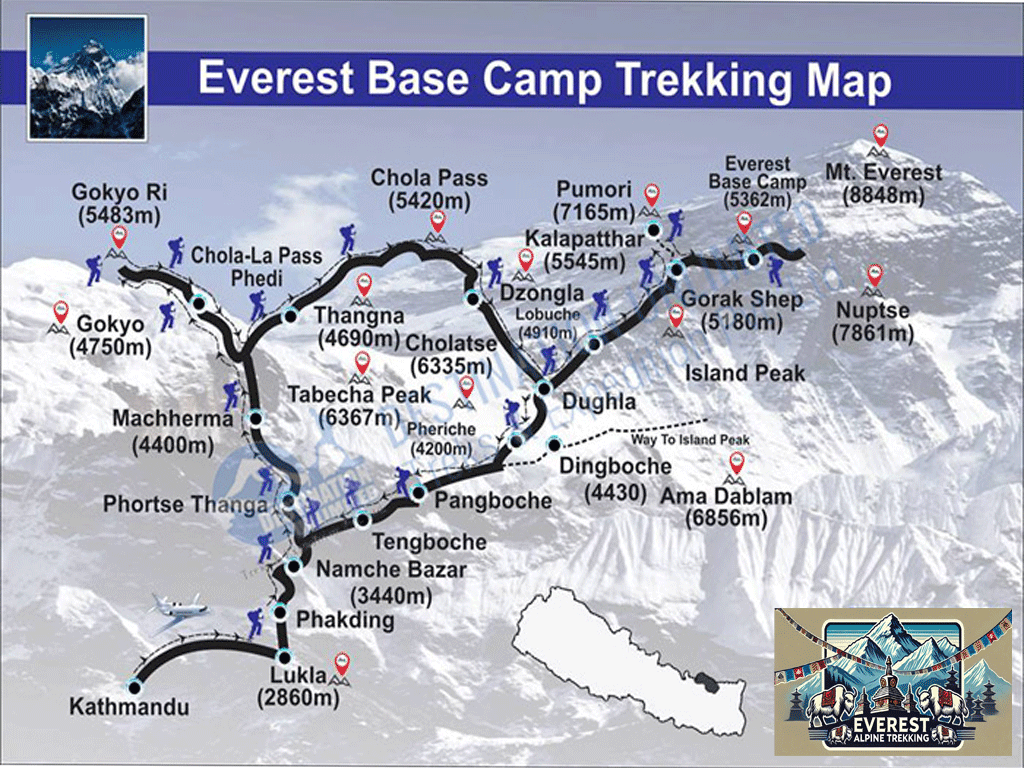
Everest Base Camp Trek Map