

🏔️ History of Island Peak Climbing (Imja Tse) – Information>
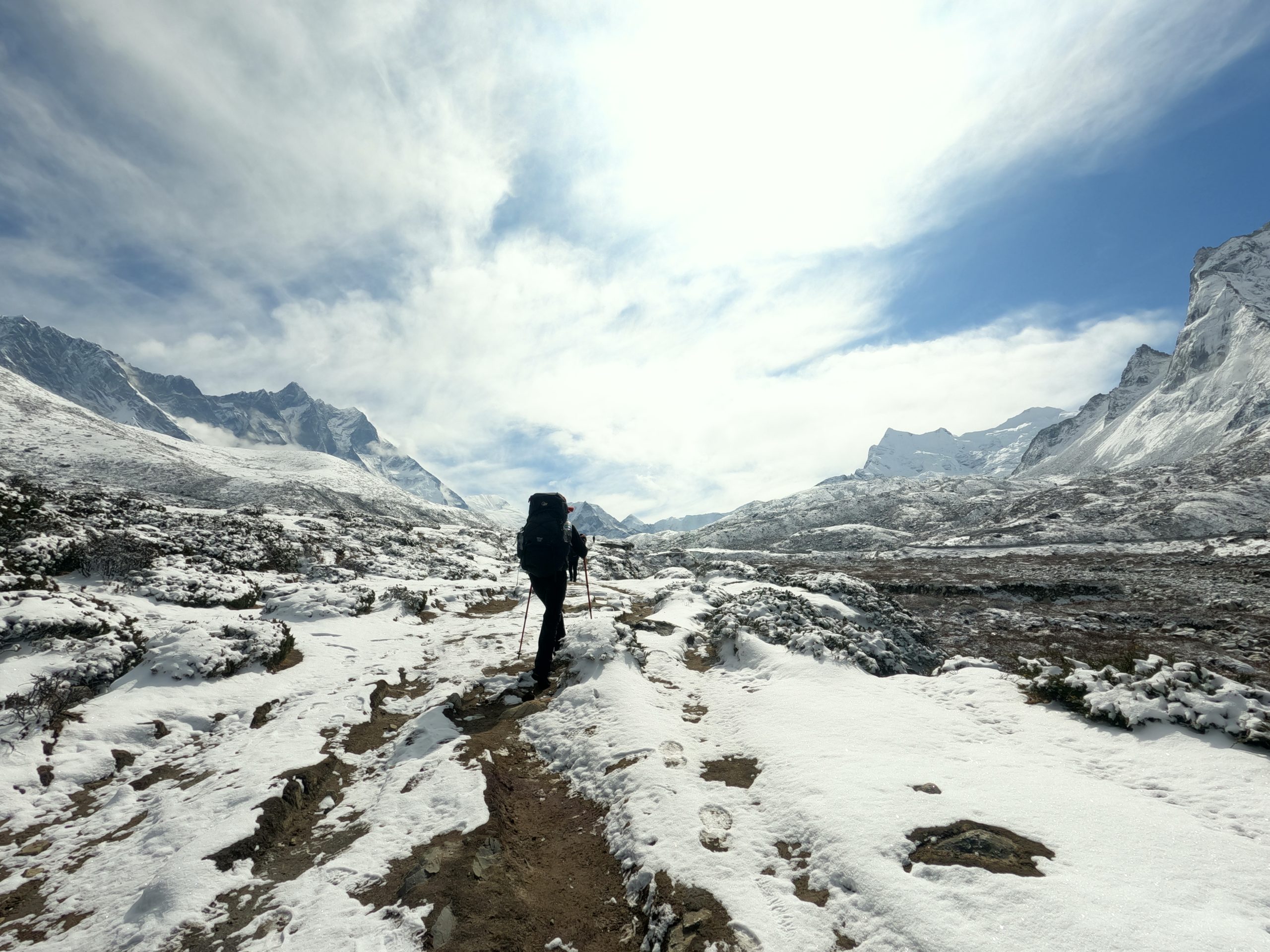
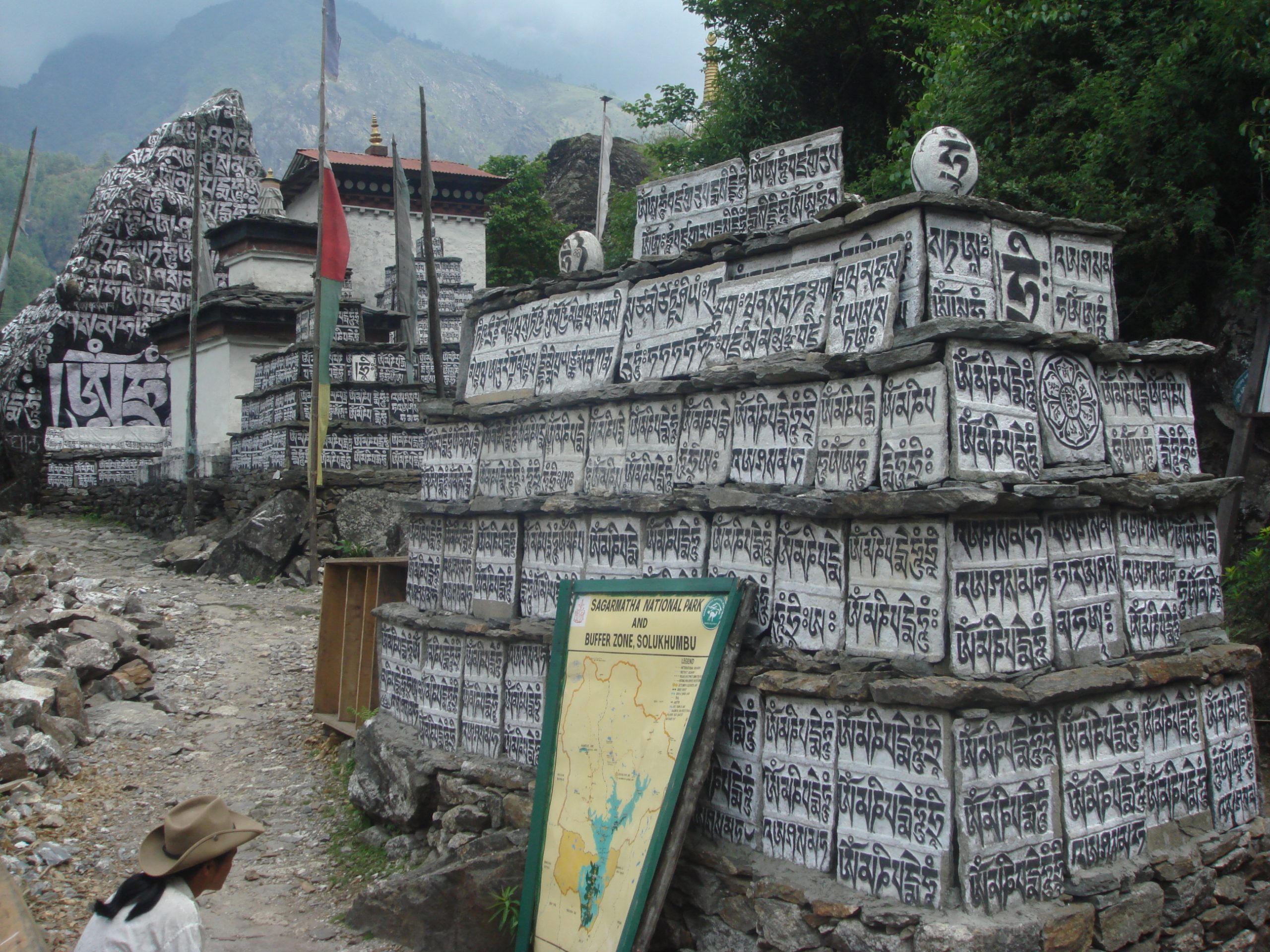
Island Peak, also known as Imja Tse (6,189 m), is one of the most popular trekking peaks in Nepal. It is located in the Everest region within the Sagarmatha National Park, near the villages of Chhukung and Dingboche in the Khumbu Valley.
📜 Early Naming and Discovery>
The peak was named “Island Peak” in 1953 by members of a British expedition led by Sir Edmund Hillary. From a distance, the mountain looks like an island rising from a sea of ice when viewed from the Imja Valley glacier—hence the name.
Later, it was officially renamed Imja Tse, but both names are still commonly used today.
🧗 First Ascents and Mountaineering History>
Island Peak was first climbed in 1953 as a training climb by the British Everest expedition team. The main purpose was to help climbers:
01: Acclimatize to high altitude.
02: Practice basic ice and snow climbing techniques.
03: Prepare for the successful Everest ascent.
Because of this, Island Peak became an important training peak for Everest expeditions.
🏔️ Role in Everest Expeditions>
Island Peak is closely connected to the history of Everest climbing in Nepal. Many early and modern Everest climbers used this peak as part of their preparation before attempting the world’s highest mountain, Mount Everest.
Its location in the Khumbu region made it a natural training ground due to:
01: Glacial terrain.
02: High altitude conditions.
03: Technical ice wall near the summit.
🧭 Development as a Trekking Peak
After Nepal opened trekking peaks for commercial climbing in the 1970s, Island Peak became one of the most popular climbing destinations. It is now classified as a trekking peak managed by the Nepal Mountaineering Association.
Today, it is widely chosen because it offers:
01: Beginner-friendly mountaineering experience.
02: Stunning Himalayan views (Lhotse, Ama Dablam, Nuptse).
03: Combination with Everest Base Camp trek.
🌿 Cultural and Regional Importance>
Island Peak lies in the heart of the Sherpa homeland in the Khumbu region. The area is deeply connected with mountaineering history, Buddhism, and Himalayan culture.
The nearby valleys, monasteries, and trails reflect centuries of Sherpa traditions and Everest expedition history.
Overview
Island Peak climbing is considered a moderate trekking peak, suitable for trekkers who want to experience real Himalayan climbing without extreme technical difficulty. It is often combined with the famous Everest Base Camp trek.
Trip Highlights
- Combination with Everest Base Camp trek.
- Stunning views of Lhotse, Nuptse, Ama Dablam, and Baruntse.
- Cultural experience in Sherpa villages like Dingboche and Chhukung.
- Exciting glacier walking and ice climbing section.
- Panoramic summit view of the Khumbu Himalaya.
Itinerary
We complete our custom formalities at the Tribhuwan International Airport in Kathmandu. Afterward, there is a Everest Alpine Trekking representative waiting for us at the gate who will take us to our hotel. We can then spend the rest of the day taking rest. In the evening, we get to try Nepalese cuisine at a welcome dinner hosted by Everest Alpine Trekking. Overnight in Kathmandu.
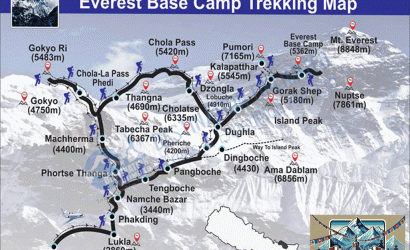
After breakfast, we will be taken to the domestic terminal of TIA for an early morning flight to Lukla. After a flying above the breathtaking green and white mountains, we reach Tenzing-Hillary Airport at Lukla. This is one of the most beautiful air routes in the world culminating in a landing on a hillside surrounded by high mountains. Upon our arrival at Lukla, we meet our other crew members and after some packing and arrangements, we start our trek through the prosperous village of Lukla until we reach Phakding. To assist in acclimatization, we only have a short hike today. However, if interested in additional activities, we can take a side trip to a nearby monastery. Overnight in Phakding.
The second day of the Everest Base Camp via Island peak climbing takes you from the various Sherpa village of Phakding to Namche Bazaar. Aling the trail you will pass the Toktok village, Benkar village, Monjo village, and the main hub of Sagarmatha National Park. Besides Jorsale village is the last teahouse that is better to have lunch at Jorsalle. After lunch, the trail goes through the Dudhkoshi River for around 45 minutes to reach the Hillary Suspension bridge. When you crossed the Hillary suspension bridge the trail goes ascent to Namche bazaar and it takes approximately 2 hrs. Namche Bazaar is a massive Himalayan city where you can get most of the amenities around the Namche Bazaar. It lies at 3440m above sea level and is where you can spend a beautiful time with thrilling views of mountains.
This is the day set aside for acclimatization. Health experts recommend that we stay active and move around even during the rest day instead of being idle. There are a few options set aside for this day. We can either stroll around Namche’s quaint villages or come in contact with the Sherpa people and their rich culture, or we can hike up to the Everest View Hotel and enjoy an up-close view of the mighty Everest. While in the Namche village or upon returning from the hike to the Everest View Hotel, trekkers may also visit the local museum containing exhibits displaying the area’s native flora and fauna as well as the history of the Mount Everest region.For trekkers who want to hike for a little longer, a hike to Khumjung village (5-6 hours) may also be an option. While in the village we can visit the Edmund Hillary School and Khumjung Monastery (a monastery famous for housing the head of the Yeti!). Overnight in Namche Bazaar.
With the Himalayas as its backdrop, the monastery in Tengboche is in an excellent location. We visit the monastery in the morning and enjoy taking pictures of the monastery and the amazing landscape. We descend for about half an hour through a forest before crossing a river. Next, we trek uphill and notice that as we climb higher, the landscape becomes drier. We walk past a traditional Sherpa village of Pangboche before reaching Pheriche, a beautiful village located on a riverside. Here, we will also see a small helipad that is used for helicopter rescues during emergencies. We may even take a class with a mountain specialist in a medical clinic at Pheriche. Overnight in Pheriche.
With the Himalayas as its backdrop, the monastery in Tengboche is in an excellent location. We visit the monastery in the morning and enjoy taking pictures of the monastery and the amazing landscape. We descend for about half an hour through a forest before crossing a river. Next, we trek uphill and notice that as we climb higher, the landscape becomes drier. We walk past a traditional Sherpa village of Pangboche before reaching Pheriche, a beautiful village located on a riverside. Here, we will also see a small helipad that is used for helicopter rescues during emergencies. We may even take a class with a mountain specialist in a medical clinic at Pheriche. Overnight in Pheriche.
After breakfast, we start with an easy walk towards Dugla. Next, we trek up the steep terminal moraine of the Khumbu Glacier, and then pass through the boulder-strewn slopes as we ascend Chupki Lhara where we find an array of stones with prayer flags used as memorials to Scott Fischer (American mountaineer) and 10-time Everest submitter Babu Chiri Sherpa (Nepalese mountain guide) who perished on a mission to climb Everest. The trail then continues to the Khumbu Glacier moraine and we find ourselves facing several great peaks – Khumbutse, Lingtren, Pumori and Mahalangur Himal. Overnight in Lobuche.
We take the trail to Everest Base Camp through the once vast Gorak Shep Lake. Continuing straight ahead, we come across the Indian army mountaineers’ memorials. The path from here can be misleading; hence it is important that we follow our lead Sherpa diligently. The walk is strenuous due to thin air in the high altitude. We pass through rocky dunes, moraine, and streams before reaching the Everest Base Camp. Upon reaching the Everest Base Camp, we see tents of mountaineers that stand out in bright colors against the monotony of gray surroundings (especially in the spring). Nuptse, Khumbuste, and Pumori are the mountains we can view from the base camp. We get back to Gorak Shep for a good night’s rest. Overnight in Gorak Shep.
We prepare for an early morning departure, amid pre-dawn darkness and cold temperatures (-10 to -14 C). Plus, there is always the potential for chilly winds which are quite common. Familiar peaks such as Lingtren, Khumbutse, and Changtse tower to the east even as Everest begins to reveal itself. But, it is upon reaching Kala Patthar that we get to see360 degree up-close and formidable views of Mt. Everest. We take pictures, enjoy the magnificent mountain panorama, and then return back to Lobuche for a good night’s rest. Overnight in Lobuche.
After breakfast, we trek via Khumbu Glacier to Kongma La Base Camp (5,000m). The ascent to Kongma La pass is the most difficult part of our trek today. In the Kongma La, we see cairn wrapped in prayer flags to mark the pass. Then we descend gradually to Imja Khola valley, followed by another descent to Chhukung, a small summer settlement. After reaching Chhukung we will also check our equipment in order to get ready for our ultimate climb. Overnight in Chhukung.
The trek to Island Peak Base Camp is on a fairly steep trail. First, we climb south then turn east to the main line of the valley. We then walk on a winding path below the southern flank of the moraine from the Lhotse Glacier. Next, we continue walking on a pleasant trail along a streamside. The route to the Amphu Labtsa lies to the southeast. A crisscross route through the Imja and Lhotse glacier moraines leads to a wide valley flanking the SW side of Island Peak. Overnight at Island Peak Base Camp.
We begin our pre-climb training today after breakfast. Our guides will provide training on peak climbing techniques and the proper ways of using climbing gears such as the ice ax climbing boots and crampons, harness, ascender, etc. The training will also include using ropes to go up and down. Although it is not mandatory to have prior training for Island Peak Climbing, we strongly believe that some training experience will boost your confidence and climbing skills to increase the chances of scaling the summit as well as to fully enjoy the experience. We can spend the rest of the day hiking to high camp and back or resting for the next day’s climb. Overnight at the base camp.
We wake up early today at around 1 to 1 /30am and have our breakfast before beginning our climb. It is important we reach the summit before noon because in the afternoon the strong winds in the highlands might become a barrier for a successful summit. The trail moves up beyond the base camp for several hundred meters before striking off the steep hillside. Initially sandy, the path soon turns to grass before becoming boulder strewn. As we climb up the hill, we will see that the slope narrows and the trail enters a steep rock channel. We climb the rock gully. This is not difficult, but there are several short rock steps to climb before we emerge on the right side of the gully. The route then follows a ridgeline, which leads to an exhilarating and exposed traverse onto the snout of the summit glacier. The guides will fix a rope when required. A steep snow slope leads us onto the summit ridge. Both fixed rope and man rope will be used during the climb for safety. We use fixed rope after successfully climbing on rock. The length of the rope will usually be 350 m. However, the length depends on the time of the season and the crevasses.There are two newly formed crevasses which are approximately 3 and 4 meters long. We will be using ladders to cross them. After enjoying the summit views and taking pictures, we descend all the way to Island Peak Base Camp where some of our crew are waiting for us. We celebrate on our successful Island Peak climb.
Today’s walk will be a much easier as we descend to the lower altitudes. Following the same route back through the wide valley of Khumbu Khola, we pass through the beautiful Sherpa villages, Orsho and Shomare. We can also take a different trail to visit the Gompa in Upper Pangboche, which is believed to be the oldest in the Khumbu region or take the regular trail to reach Pangboche. Pangboche is a scenic village surrounded by Everest to its north, Ama Dablam, Thamserku, and Kangtaiga to the east, the Kongde range to the south and the Imja Tse river flowing through the wide fertile valley.
From Pangboche we retrace our steps down to the Imja Khola and up through the forest to Tengboche. If interested, we can also visit nuns at the Tengboche monastery. After lunch at Tengboche, we continue through the hillside blanketed by rhododendron and juniper trees. After crossing the bridge over the Dudh Koshi River, our trail follows the Dudh Koshi gorge descending rapidly through the pine forests before reaching Sansa. We keep a lookout for wildlife such as mountain goats, snow leopards, colorful pheasants, etc., while passing through the forest. After passing a Chorten, we reach the army camp at Namche Bazaar. Overnight in Namche Bazaar.
The trail descends steeply downward so we need to walk cautiously as our shaky legs continuously battle the rocky terrain. After crossing the suspension bridges over the fast flowing Dudh Koshi and its tributaries, the trail becomes more level and natural. After our arrival in Lukla, we stretch those sore legs and recall the experiences of the last couple of weeks. Overnight in Lukla.
We catch an early morning flight to Kathmandu after our long mountain journey. After reaching Kathmandu, we can take a rest or do some souvenir shopping. If we want to explore any other areas of Kathmandu, we may do that today. Our guides can help you with both souvenirs shopping or sightseeing. There will be a farewell dinner in the evening to celebrate the climbers’ successful summit of the Island peak. Overnight in Kathmandu.
Your adventure in Nepal comes to an end today! There is nothing to do but trade emails with your travel companions and organize your photos. A representative from Everest Alpine Trekking will take you to the airport, approximately 3 hours before your scheduled flight. On your way home you’ll have plenty of time to plan your next adventure in the wonderful country of Nepal.
Cost Includes
- Airport pick-up and drop-off in Kathmandu.
- Hotel accommodation in Kathmandu (before and after trek/climb).
- Domestic flight Kathmandu – Lukla – Kathmandu.
- Required trekking and climbing permits.
- Sagarmatha National Park entry permit.
- Island Peak climbing permit (NMA).
- Khumbu rural municipality permit.
- Experienced licensed trekking and climbing guide.
- Climbing support staff and porter service.
- All meals during trekking and climbing (breakfast, lunch, dinner).
- Tea, coffee, and basic hot drinks during trek.
- Climbing equipment support (ropes, ice screws, group safety gear).
- Camping equipment at Island Peak Base Camp (tents, kitchen, dining setup).
- Base camp support and logistics.
- First aid medical kit carried by guide.
- Government taxes and service charges.
Cost Excludes
- International flight tickets to/from Nepal.
- Nepal entry visa fees.
- Personal travel insurance (must include high-altitude trekking and helicopter evacuation).
- Personal climbing gear (boots, crampons, harness, helmet, ice axe, down jacket, sleeping bag, etc.).
- Extra hotel nights in Kathmandu due to early arrival, late departure, or flight delay.
- Alcoholic drinks, soft drinks, and extra beverages not included in meals.
- Personal expenses (laundry, phone calls, internet, snacks, souvenirs).
- Tips for guide and porter (expected but not mandatory).
- Emergency rescue or helicopter evacuation (if needed).
- Costs due to itinerary changes caused by weather or personal reasons.
FAQS
Island Peak (also known as Imja Tse) is a popular trekking peak located in the Everest region of Nepal. Standing at 6,189 m), it offers an excellent opportunity for climbers to experience high-altitude mountaineering, including glacier navigation and technical climbing. It is considered a suitable peak for those with some prior climbing experience but looking to summit a Himalayan peak.
The best time to climb Island Peak is during the pre-monsoon (spring) season, from late March to early May, and the post-monsoon (autumn) season, from September to November. These months offer stable weather, clear skies, and relatively mild temperatures. Winter and monsoon seasons are less ideal due to heavy snowfall, high winds, and colder temperatures.
While previous climbing experience is not mandatory, it is highly recommended. A basic understanding of mountaineering skills, such as using crampons, ice axes, and ropes, is essential. Many climbers undertake preparatory courses before attempting Island Peak. For those new to climbing, some operators offer training sessions during the trek, especially on climbing techniques and safety.
Essential gear for Island Peak includes mountaineering boots, crampons, an ice axe, a harness, ropes, a helmet, a climbing jacket, and warm layers. It’s also necessary to bring a sleeping bag rated for cold temperatures, a headlamp, trekking poles, and appropriate clothing for both trekking and climbing. Some operators provide rental gear, but it’s advisable to bring your own for better fit and comfort.
The summit day of Island Peak typically takes around 10-12 hours. Climbers leave base camp early in the morning, often around 2-3 a.m., to ensure they have enough time to reach the summit before the afternoon winds increase. The ascent involves a steep glacier and rock section, followed by a fixed-rope section before reaching the summit. The descent back to base camp takes around 4-5 hours.
Preparation for Island Peak climbing involves improving strength, stamina, and altitude acclimatization. Training should focus on cardiovascular fitness, such as running, hiking, and cycling, as well as strength exercises targeting legs, core, and upper body. Hiking with a loaded backpack and practicing climbing skills on smaller peaks or ice walls can also help. Cardiovascular endurance is key to coping with the high altitudes.
The success rate for summiting Island Peak typically ranges between 70-85%. Factors affecting success include weather, individual fitness, acclimatization, and proper preparation. Most climbers who follow the itinerary, prepare adequately, and ascend with a professional guide have a high chance of reaching the summit. Success also depends on the group’s collective ability to handle physical and mental challenges at high altitudes.
The cost of climbing Island Peak varies, but on average, it ranges from $2340 to $35,00 USD. This includes permits, guide fees, transportation (flights to Lukla), accommodation, meals, and some gear rental. Costs can increase if you opt for additional services, such as private guides or luxury accommodations. It is recommended to book through a reputable trekking agency that provides comprehensive packages with safety and support services.
Island Peak is considered a moderately challenging climb, suited for individuals with previous mountaineering experience or strong trekking and physical conditioning. The technical aspects, such as ice climbing, rope handling, and glacier travel, require preparation. While it is not as challenging as higher peaks like Everest, it still presents a significant test at altitude, particularly for those not acclimatized.
Island Peak stands at 6,189 meters), and altitude sickness can affect climbers above 3,500 meters). Acclimatization is key to minimizing risks, so climbers must take time to adjust to the altitude gradually. Symptoms of altitude sickness include headaches, dizziness, nausea, and shortness of breath. Climbers are advised to take rest days to allow the body to acclimatize.
If a climber shows signs of altitude sickness, the first step is to descend to a lower elevation to aid recovery. Guides are trained to recognize symptoms and make decisions about the best course of action. In severe cases, medical evacuation may be necessary. It’s important to monitor your own and your team members’ health, especially during the acclimatization phase. You have to leave your mountaineering travel insurance copy in our Kathmandu Office. Our office clerks will assess and do the necessary arrangements for your rescue. In the meantime, our Sherpa and crew members will take care of you until the help arrives.
Island Peak Base Camp is located at approximately 5,200 meters) and offers a basic, yet comfortable, setup for climbers. The camp consists of tents, a dining area, and a toilet. Climbers typically rest here for a night or two to prepare for the summit push. The location provides stunning views of surrounding peaks like Lhotse and Nuptse, offering a unique mountain experience.
A typical Island Peak itinerary lasts around 14 to 19 days. The trek starts with a flight to Lukla, followed by a trek through the Everest region to base camp. The itinerary includes acclimatization days in places like Namche Bazaar, Dingboche, and Chhukung. After reaching Island Peak Base Camp, climbers ascend the peak, and then return via the same route to Lukla.
The summit day presents several challenges: the physical exertion of a long day, technical sections requiring the use of ropes and ice axes, and the high-altitude environment. The final push from the High Camp involves a steep section, which can be demanding. Weather can also be unpredictable, with high winds and cold temperatures. Proper acclimatization, physical readiness, and mental strength are essential to overcome these challenges.
Avalanche risk on Island Peak is relatively low, but it is still present, particularly after heavy snowfall or during warmer weather. The experienced guides accompanying the expedition will assess the conditions regularly and take the necessary precautions. Climbers are advised to follow their guide’s instructions and avoid unnecessary risks.
Map