
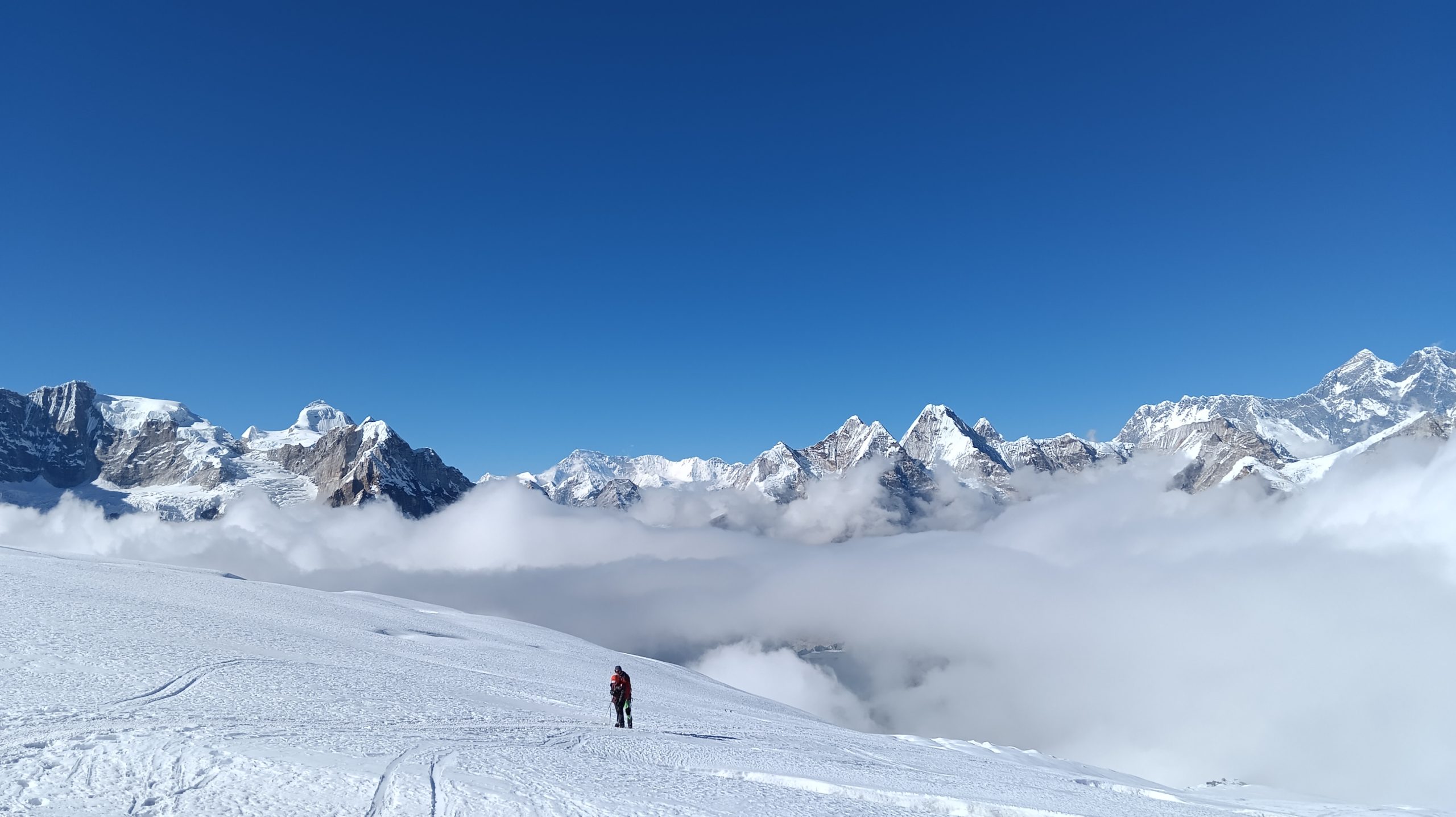


Mera Peak Climbing Itinerary of 16 days takes you to Nepal’s highest trekking peak, Mera Peak. Lying in the Hinku Valley of Everest Region, Mera Peak is a popular climbing peak with an easy route. A favorite of many climbers who come to Nepal, Mera Peak is the perfect acclimatization peak if you are planning to climb Mount Everest or any of the major peaks in the Khumbu Region.
The route to Mera Peak lies off-the-beaten-path in the rarely visited Hinku Valley. The trail is secluded, and the area is wild and pristine, with very few human settlements. Most nights, you will be sleeping at teahouses located at isolated kharkas or summer camps of yak herders.
Overview
Mera Peak (6,476m) is the highest trekking peak in Nepal and an ideal objective for climbers seeking a first Himalayan summit. This 16-day itinerary follows the traditional route through Chutanga, Zatrwa La Pass, and the Hinku Valley, providing gradual acclimatization and breathtaking mountain scenery.
Trip Highlights
- Summit Nepal’s highest trekking peak (6,476m).
- Spectacular views of Everest, Makalu, Lhotse, Kanchenjunga & Cho Oyu.
- Remote Hinku Valley trekking.
- Professional Sherpa guides and proper acclimatization.
- Ideal for beginner climbers with basic fitness.
- Led by experienced Sherpa climbing guides.
- Classic route via Chutanga & Zatrwa La Pass.
- Proper acclimatization and contingency day.
Itinerary
Arrival at Tribhuvan International Airport. Meet our team and transfer to the hotel. Evening trip briefing and preparation.
Scenic early-morning flight to Lukla. Trek through pine and rhododendron forests to Chutanga, a peaceful camping site.
Trek: 3–4 hours
Rest and short hikes around Chutanga to help with acclimatization before crossing the high pass.
Challenging day crossing Zatrwa La Pass with magnificent views of the Hinku Valley. Descend to Thuli Kharka.
Trek: 6–7 hours.
Descend through alpine meadows and forested trails along the Hinku River to Kothe.
Trek: 5–6 hours.
Gradual ascent through yak pastures and glacial valleys with views of Mera Peak.
Trek: 3–4 hours.
Short but steep trek to Khare, the main base village for Mera Peak climbing.
Trek: 3–4 hours.
Rest day with basic climbing training: ice axe, crampons, rope techniques, and safety procedures.
Climb over the Mera Glacier to High Camp. Enjoy spectacular sunset views of Everest, Makalu, Lhotse, Cho Oyu, and Kanchenjunga.
Trek: 5–6 hours.
Early-morning summit attempt. From the top, enjoy one of the widest panoramas in Nepal. Descend carefully back to Khare.
Climb: 8–10 hours.
Reserved for bad weather or additional acclimatization (important for safety and success).
Descend back through Thangnak to Kothe.
Trek: 5–6 hours.
Ascend gradually back toward Thuli Kharka.
Trek: 5–6 hours.
Cross Zatrwa La Pass again and descend to Lukla. Farewell dinner with the climbing team.
Trek: 6–7 hours.
Early-morning flight back to Kathmandu. Free time for rest or sightseeing.
Transfer to the airport for your international departure.
Cost Includes
- Complimentary airport pick-up and drop-off
- 3, nights' accommodation in Kathmandu with breakfast
- Farewell dinner in a typical Nepali restaurant
- All necessary trekking permits, such as National Park, TIMS, climbing permits.
- During the mountain season, three meals per day are consumed: breakfast, lunch, and dinner.
- Complimentary duffel bag.
- Staff insurance, salary, meals, accommodations, equipment, transportation.
- Rescue arrangements, if necessary
- Certificate of Achievement
- English-speaking professional local guide who is government-registered, First Aid and Eco-trained, and carries a medical kit.
- professional climbing guide and his meals, accommodations, insurance, salary, etc.
- All necessary climbing gear, such as a tent, rope, ice axe, and so on.
- All necessary expedition gear, tents, cooking equipment, etc. for Mera High Camp.
Cost Excludes
- Lunch and dinner in Kathmandu.
- Emergency rescue evacuation if required.
- Personal accident insurance or Helicopter rescue.
- Airfare international flights.
- Nepal entry visa fee, Visa issuance is easy at the arrival.
- Any kind of Alcoholic, hot and cold drinks, hot shower.
- Alcoholic beverages, Mineral water, laundry, phone calls, internets.
- Personal climbing equipment
- All kind of Personal Expencess
- Ice fall fees Garbage Deposit (Sharing with other member) if applicable.
- Wake talkies &Filming permit.
- Any others expenses which are not mentioned on Price Includes section
- Tips, gifts, souvenirs.
FAQS
Mera Peak is considered a moderately difficult climb. It requires a good level of physical fitness and previous trekking experience is recommended. Some technical climbing skills may be required, especially towards the summit.
While previous climbing experience is not mandatory, it is highly recommended to have prior trekking experience at high altitudes. Basic mountaineering skills such as using crampons, ice axe, and ropes are essential. It is advisable to climb with an experienced guide or join a reputable trekking agency that provides skilled guides.
You will need a climbing permit issued by the Nepal Mountaineering Association (NMA) and a Sagarmatha National Park permit. These permits can be obtained through a registered trekking agency or the NMA office in Kathmandu.
The best time to climb Mera Peak is during the spring (March-April-May) and Autumn (September-November.Decmber) seasons. These months offer stable weather conditions, clear views, and favorable climbing conditions. However, it is important to check the weather forecast before starting the climb.
The typical duration for Mera Peak climbing is around 14-20 days. This includes acclimatization days, trekking to and from Lukla, and the summit push.
During the trek, you will stay in teahouses or lodges available in the villages along the route. However, at higher altitudes, you will need to set up tents for camping. Teahouses provide basic facilities such as beds, meals, and toilets, while camping requires carrying your own camping equipment.
Climbing Mera Peak requires proper acclimatization and preparation. It is advised to climb with an experienced guide or join a reputable trekking agency that provides experienced guides and necessary equipment. Safety measures, such as regular health check-ups, proper acclimatization, and emergency evacuation plans, should be in place.
Some essential climbing equipment required for Mera Peak climbing includes crampons, ice axe, harness, helmet, ropes, and proper clothing suitable for high altitude conditions. It is recommended to rent or buy these items in Kathmandu before starting the trek.
While it is possible to climb Mera Peak solo, it is highly recommended to climb with an experienced guide or join a reputable trekking agency. Climbing with a guide ensures safety, proper guidance, and assistance in case of any emergencies.
Yes, you can rent climbing equipment in Kathmandu. There are several shops and rental agencies that provide climbing gear on a daily or weekly basis. However, it is important to check the condition and quality of the equipment before renting.
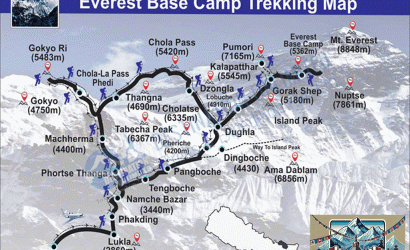
Mera Peak Climbing Map