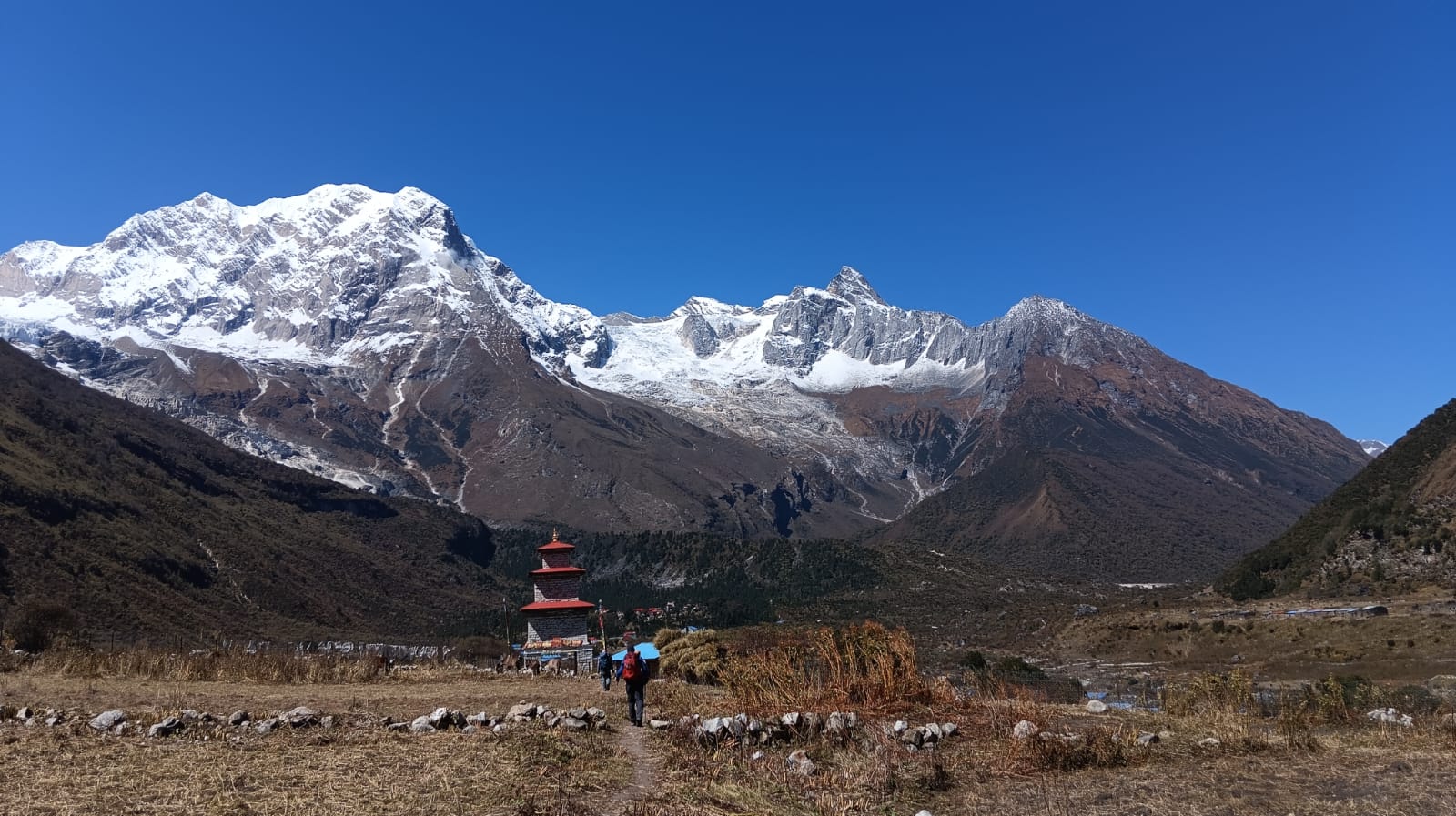

The Kanchenjunga Region Trek is one of Nepal’s most remote and culturally rich trekking destinations. Located in far-eastern Nepal and bordering India (Sikkim) and Tibet, this region is dominated by Mount Kanchenjunga (8,586m)—the world’s third-highest mountain. The history of trekking in the Kanchenjunga region is deeply connected to local beliefs, early exploration, and Nepal’s gradual opening to foreign trekkers.
🌄 “Ancient Significance of Kanchenjunga”
The name Kanchenjunga comes from Tibetan words meaning “The Five Treasures of the Great Snow.” These treasures symbolize gold, silver, precious stones, grain, and holy scriptures, believed to be hidden in the mountain by deities. For centuries, Kanchenjunga has been revered as a sacred mountain, and local communities traditionally avoided stepping on its summit out of respect.
Even today, many climbers stop just short of the true summit to honor this long-standing spiritual belief.
🧭 “Early Exploration and Mapping”
Before the mid-20th century, the Kanchenjunga region remained largely unexplored by outsiders due to:
02: Extremely rugged terrain
03: Dense forests and deep river gorges
04: Political restrictions near international borders
05: British surveyors first mapped the area in the 19th century during the Great Trigonometric Survey of India, identifying Kanchenjunga as the highest mountain in the world at that time (before 06: Everest was accurately measured).
🧗 “First Ascent of Mount Kanchenjunga”
The modern history of the region gained global attention in 1955, when a British expedition led by Joe Brown and George Band successfully made the first ascent of Kanchenjunga via the southwest face.
Respecting local traditions, the climbers stopped just below the actual summit—a practice that many expeditions continue today.
🥾 Beginning of Trekking in the Kanchenjunga Region
For decades after the first ascent, the Kanchenjunga region remained closed to foreign trekkers. It was not until the late 1980s and early 1990s that Nepal officially opened the area for restricted trekking.
01: Introduction of Restricted Area Permits (RAP).
02: Limited group access with licensed guides.
03: Emphasis on conservation and cultural preservation.
04: These regulations helped protect the region’s fragile environment and traditional lifestyle.
🌿 “Kanchenjunga Conservation Area“
In 1997, the government of Nepal established the Kanchenjunga Conservation Area (KCA)—the first conservation area managed jointly by the government and local communities.
01: Protected alpine ecosystems and wildlife
02: Empowered local ethnic groups such as Limbu, Rai, and Sherpa
03: Promoted sustainable trekking practices
04: The conservation area strengthened the region’s appeal as an eco-friendly trekking destination.
🏘️ “Cultural Heritage Along the Trail”
The trekking routes pass through villages inhabited by:
01: Limbu and Rai communities in lower elevations
02: Sherpa and Tibetan-influenced groups in higher valleys
03: These communities have preserved:
04: Ancient monasteries and prayer walls
05: Traditional farming and yak herding
06: Unique customs, languages, and festivals
07: Trekking in Kanchenjunga is as much a cultural journey as it is a physical adventure.
🌍 “Kanchenjunga Trek Today”
Today, the Kanchenjunga Region Trek is considered a classic remote trek for experienced trekkers. It offers:
01: Spectacular views of Kanchenjunga, Jannu (Kumbhakarna), and other peaks.
02: Deep cultural immersion.
03: A sense of true Himalayan exploration.
04: Due to its remoteness and restricted status, the trek still retains its original spirit—much like trekking in Nepal decades ago.
⏰”Best Time to Trek”
01: Spring (March–May): Rhododendron forests in full bloom.
02: Autumn (September–November): Clear skies and stable weather.
🧗 “Difficulty and Preparation”
01: Moderate to Challenging Trek.
02: Long walking days and limited facilities.
03: Best for trekkers with prior high-altitude experience.
🏔️”Legacy of the Kanchenjunga Region Trek”
The Kanchenjunga Region Trek represents the true history of Himalayan trekking—from sacred mountains and early exploration to modern conservation-focused tourism. It remains one of Nepal’s most rewarding journeys for those seeking authenticity, wilderness, and cultural depth.